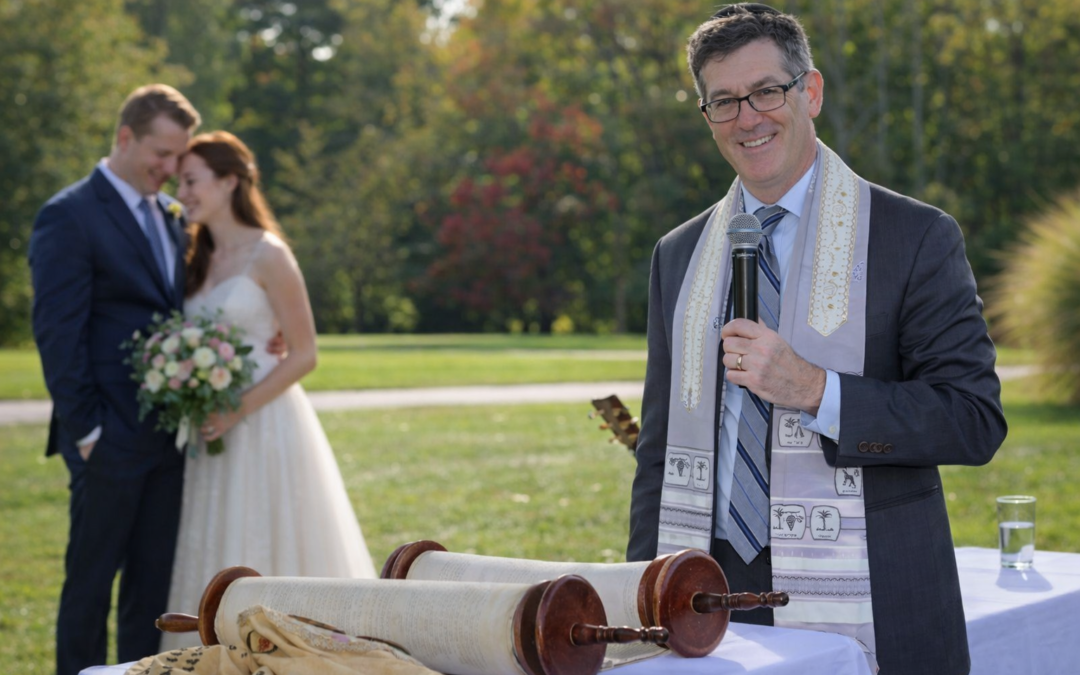
What Makes an Interfaith Wedding Ceremony Meaningful? A Rabbi Explains – Nowadays, interfaith weddings are no longer a rare sight, and this is because more and more couples, even if the individuals come from different religious and cultural backgrounds, wish to share a common life and, therefore, get married in an interfaith ceremony. The true significance of an interfaith wedding is not in throwing different rituals into a melting pot, but in the sense of intention, understanding, and authenticity, and this is why an interfaith wedding can turn out to be a very spiritual and moving event in the lives of the newlyweds and, of course, their families.
A Rabbi’s Perspective on Creating Meaningful Interfaith Wedding Ceremonies
An open dialogue is key to creating a meaningful interfaith marriage ceremony. Couples are invited to discuss how Judaism and their partner’s other religious (or secular) worldview relate to their own personal beliefs. Additionally, rather than concentrating solely on tradition, Rabbis will often encourage couples to consider their shared values, such as love, commitment, family, compassion, and ethical living.
Because of this approach, interfaith wedding ceremonies honor Jewish wedding traditions (i.e., chuppah, ketubah, and Sheva Brachot) while incorporating meaningful components from each partner’s faith tradition. Reform Judaism embraces the idea that inclusive ceremonies focus on our shared values, rather than on fixed religious divisions, and provide equal opportunity for both partners to be represented in the wedding service.
“A truly interfaith wedding ceremony is not about blending religions, but about honoring two paths with respect, intention, and love while forging one shared way ahead.”
Core Elements of Meaningful Interfaith Wedding
| Element | Why It Matters | Popular Examples | Visual Inspiration |
| Inclusivity & Balance | Makes both partners and guests feel respected | Equal rituals, inclusive language, shared focus | Chuppah with fabrics from both families |
| Personalized Rituals | Reflects the couple’s unique story | Interfaith ketubah, adapted rings, shared blessings | Illustrated ketubah or unity candle |
| Family Participation | Connects generations and cultures | Family blessings, holding chuppah poles | Breaking the glass together |
| Unity Symbols | Shows two lives becoming one | Unity candle, handfasting, sand ritual | A couple lighting one flame |
Respecting The Traditions of Both Partners Through Balance
Both balance and mutual inclusion are important aspects of creating a meaningful interfaith marriage ceremony. A Rabbi who has experience performing interfaith marriages will assist the couple with eliminating tokenism by providing the couple with an explanation of what the Jewish rituals symbolize, and the couple will be able to explore ways in which they can harmoniously coexist with the traditions of other religions.
For example:
- The home that the couple will build together is symbolized by the chuppah. If either family has any specific material or design element, it may be used in the chuppah.
- If couples want their ketubahs to accurately represent their mutual promise to marry and be a spouse, it may be adapted to inclusive language that reflects their mutual commitment.
- Jewish blessings can be combined with readings or traditions from the other partner’s religion, including the unity candle or exchanging vows.
Such combined wedding traditions enable the couple to pay respect to their ancestry while maintaining their joint identity.
Using Language that Welcomes Everyone
A further important element is the language employed at the ceremony itself. Rabbis officiating interfaith weddings tend to incorporate prayers and blessings that are receptive to all guests with varied backgrounds. In fact, the ceremony can incorporate more generic language such as love, peace, relationship, or hope rather than religious specifics.
Formal explanations of rituals, whether during the ceremony or through a program offered at the ceremony, are important for educating guests on the significance of the rituals so that they may participate in the experience emotionally.
Personalization Creates a Lasting Impact
One of the cornerstones of an effective interfaith wedding ceremony is personalization. In this case, some rabbis encourage couples to write personal vows, host family blessings, or involve guests in readings. In this respect, it can be argued that personalization enables the telling of the couple’s unique story.
A key element within interfaith wedding planning is being able to equally honor both members’ spaces while making their union possible. A common aspect within a Rabbi’s repertoire is helping facilitate this process.
Significance Going Beyond the Wedding Day
A Rabbi further reminds a couple that the significance of an interfaith wedding ceremony is far beyond the wedding day itself. The wedding ceremony provides a starting point with which a couple will begin dealing with religion, holidays, and family in their relationship with each other.
If a couple embarks on their wedding ceremony with honesty, respect, and love, the wedding becomes a commitment of unity despite differences that lasts well beyond the final blessing.
Conclusion
An interfaith wedding ceremony can be very powerful and have great meaning if it starts from respect, intentional inclusion, and shared values.
For Jewish and interfaith couples who seek expert knowledge and loving guidance for the ceremonies, contact Rabbi Ron Broden, who offers experienced guidance to help ceremonies authentically reflect each couple’s values and personalities.
FAQs
Can a Rabbi perform an interfaith wedding ceremony?
Of course. There are many Rabbis who, in Reform or emergent Judaism, perform interfaith weddings and can do complete ceremonies for both partners.
How do Jewish customs fit into an interfaith wedding?
Prospective couples may choose to observe other traditions like the chuppah and ketubah, which are then presented inclusively for the benefit of all guests.
How are two traditions of faith merged into one wedding ceremony?
This allows a couple to incorporate both of their family traditions without overwhelming their special day with rituals and traditions.
Can an interfaith wedding ceremony be personalized?
Absolutely. The personal vows, readings, and rituals of the ceremony can all serve as a way to honor the story and the beliefs of the couple.
Why is an interfaith wedding ceremony significant beyond the wedding day?
It determines how they will deal with religion, customs, and family going forward as a couple.