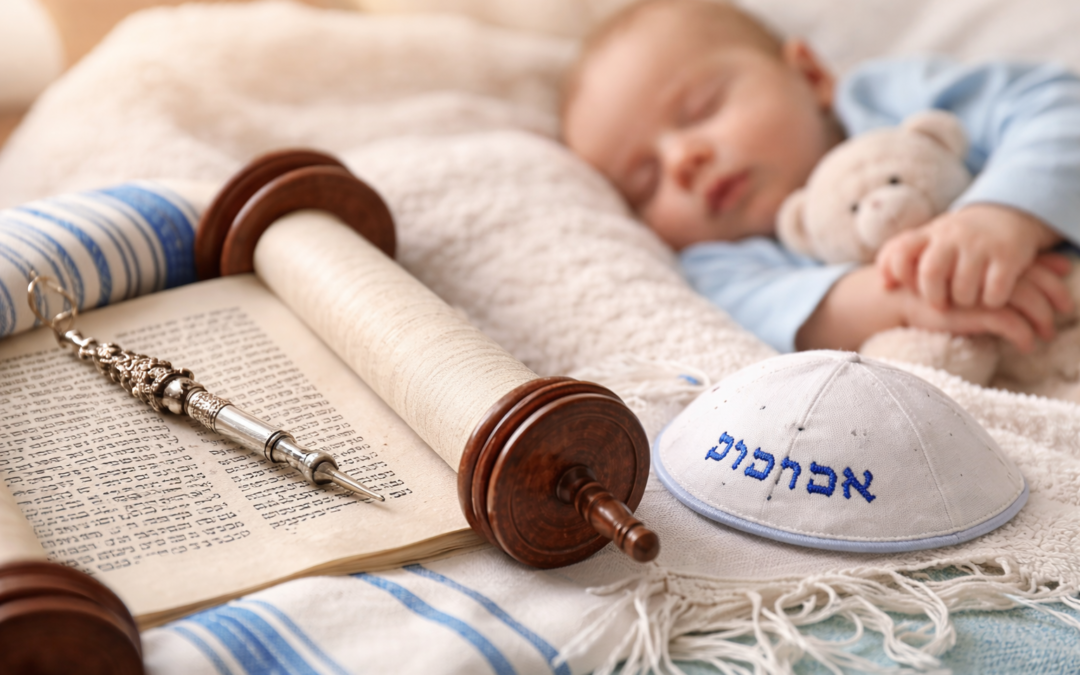
Can a Hebrew Name Influence a Child’s Destiny? – Can a Hebrew Name Influence a Child’s Destiny? For a lot of Jewish families, it is more than just a philosophical question – it is a very personal one. The Hebrew name has been regarded as something beyond mere identification ever since ancient biblical times and up to the present-day naming ceremonies. It has been believed to bear spiritual symbolism, feature the memory of ancestors, and point to the way of God. While nowadays people might consider the idea from cultural or psychological viewpoints, Judaic traditions propose that a Hebrew name could direct a person’s character, be an instrument of spiritual elevation, and mirror the special task given to a child on earth.
The Significance of a Hebrew Name
In Judaism, a name is held to be a reflection of a person’s inner nature. The Hebrew term for name, shem, is not only associated with identity but also with reputation. Whereas names that were selected for no other reason than how good they sound, Hebrew ones usually have unmistakable significations going back to the biblical language. For instance:
- David means beloved.
- Miriam has been historically connected with bitterness or rebellion, characterizing the traits of strength and resilience.
- Elijah (Eliyahu) stands for My God is the Lord.
- Leah might signify weary; however, she is the symbol of endurance and faith.
There is a story behind each of the given names. Parents are quite often attracted to giving the name of a certain person who has the characteristic that they want their child to be imbued with, such as kindness, bravery, wisdom, or devotion.
Biblical Evidence: Names That Shaped Destiny
The Hebrew Bible is full of instances where a person’s name and destiny are closely intertwined. Abraham is probably one of the most outstanding examples. He was first called Avram, but God changed his name to Abraham, which means father of many nations. The change was not only symbolic, but it also marked a new mission in his life and a covenant.
In the same way, Sarah was changed from Sarai to continue with her spiritual role. After his night struggle with an angel, Jacob became Israel, a sign of his spiritual development and destiny as a nation.
Thus, these examples imply that names in Jewish tradition are not arbitrary tags. They express inner transformation, spiritual elevation, and future calling.
The Spiritual Perspective: Letters and Divine Energy
In Jewish mysticism, especially Kabbalah, the Hebrew letters are thought to be spiritually powerful. Each letter has a numerical value (gematria) and a symbolic meaning. The particular set of letters in a person’s name is said to carry the individual divine energy of that person.
It is said that parents get divine inspiration when they choose a Hebrew name for their child. The name is in harmony with the child’s soul and life mission. From this perspective, the question (Can a Hebrew Name Influence a Child’s Destiny?) gets a strong positive answer – because the name points directly to the soul’s spiritual blueprint.
Traditionally, a rabbi may suggest adding a Hebrew name if a person is very sick as a gesture of request for divine help and changing the decree of the evil one. The rabbi’s suggestion to add a Hebrew name comes from the deep understanding that names are life-changing and powerful.
“The soul’s energy flows out through a person’s name.”
Naming After Ancestors: A Bridge Between Generations
In Jewish tradition, it is very common to name a child after a deceased relative, especially one considered to be a very righteous or kind person. It is the Ashkenazi Jews who have this custom very much.
The idea is that the little one will not get the ancestor’s whole destiny, but the name will tie them spiritually. It is a mode of inspiration and continuity. If a child is named after a grandfather who is dearly loved, the child may be told stories about the grandparent’s character and the things that he did, thus creating positive identity development in the child.
This bond between name and ancestry provides a further element to the destiny discussion. The name is the living memory and the signpost of values.
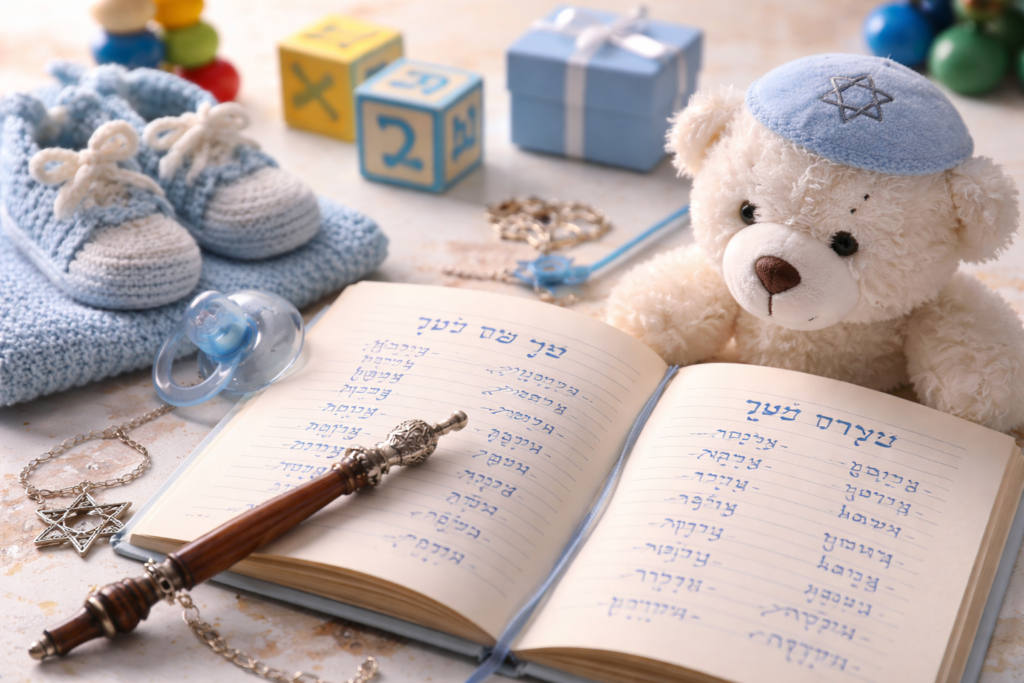
Modern Interpretations: Psychology and Identity
Apart from strictly religious accounts, even modern psychology agrees with the idea that names might have some sort of influence on a person’s life outcomes, just not in a mystical way.
Essentially, a name affects people’s perception of the person who bears it. This goes as far as influencing the first impressions, the sense of belonging to a certain culture, and even one’s self-esteem. A child who gets to know the significant power of their Hebrew name may take on the qualities represented in that name and try to live up to them.
Such as a child named Ariel (lion of God), who, through their name, may get to know a feeling of being strong. On the other hand, a child named Shira (song) would probably feel very happy and sing lots of songs, thus building an identity around joy and creativity.
Thus, even if we ignore spiritual canons, a Hebrew name, through a child’s identification with it and social contacts, may determine, in a way, their fate.
Free will: The Balancing Principle
Judaism often highlights free will as one of its central themes. A Hebrew name may give a person a spiritual performance or be a source of inspiration, but in no way does it take over someone’s personal choice.
Destiny, in Jewish philosophy, does not refer to a fixed and pre-established course of events. It is through the notion of partnership that man and God together determine the future. A name is like an invitation to a world of possibilities, but one’s inner nature and choices are what really seal one’s fate.
This balance safeguards the beliefs from going into a fatalistic mode. Rather than deciding on the destiny, a Hebrew name helps or steers it.
Why the Question Still Matters Today
In today’s interconnected world, plenty of families opt for Hebrew names to keep their Jewish identity alive. Some families do it for the spiritual aspect, while others do it for the sake of cultural continuity.
Choosing a Hebrew name is a deliberate act that elevates naming to a meaningful ritual. It prompts the parents to consider the heritage, faith, and hopes for their child’s life.
Whether one interprets the impact as coming from God, to the human psyche, or as a symbol, the profound significance of Hebrew names is what keeps the tradition strong and up-to-date.
Conclusion
So, can a Hebrew Name Influence a Child’s Destiny? Through spiritual meaning, connection to ancestors, and the power of symbols, Jewish tradition strongly hints at the possibility. The Hebrew name may serve as an inspiration to a person and act as a mirror to his/her soul’s potential. Still, Judaism emphasizes the concepts of free will and personal choices as the factors that dictate the individual’s journey most. Basically, a Hebrew name is a valuable starting point, but one’s fate is mostly shaped by one’s deeds and character.
FAQs
Can a Hebrew name really affect my child’s future?
A traditional Jewish perspective would say “yes,” that it could have an influence over the spiritual path and the formation of certain character traits. On the other hand, it won’t completely decide the future. The child’s personal choices and upbringing are the main factors.
Is there scientific evidence that Hebrew names influence destiny?
There is no scientific evidence supporting the mystical influence of names. However, research points out that names can influence our self-image and the way people interact with us, thus creating a pattern of chances over time.
What if I decide on a Hebrew name purely by liking its sound?
That’s totally fine. Although meaning is an important aspect in a traditional context, the feelings and the intention behind a name are just as significant. A profoundly chosen name, if selected with love, is precious in its own way.
Why do some people end up changing their Hebrew names?
Sometimes, notably when the person is unhealthy, a new name is given to indicate a new spiritual phase. Biblically, name changes were mostly about personal transformation and development.
If a child is named after a person, will it be a sure sign that they have the same qualities?
Not necessarily. The name is meant to be a source of inspiration and a connection, without being a certainty. The child’s individuality is the result of their experiences and choices.